Method one: the weekly glance
Once a week, open your account, read the last seven days, and write down one number: what was spent. No categories, no receipts, no software.
This is the lightest possible method and, for many households, enough. Awareness alone changes spending more than any category breakdown does.
Method two: three buckets
Sort spending into fixed, living, and occasional. Fixed is rent, insurance, subscriptions. Living is groceries, transport, household. Occasional is gifts, repairs, travel, one-off purchases.
Three buckets show the shape of a month without turning every purchase into a decision. It is the best balance of effort and insight for most families.
Method three: full categories
Detailed categories are genuinely useful when you are trying to change one specific behaviour, negotiate a shared budget, or work out whether a move is affordable.
They are heavy to maintain indefinitely. Consider using full categories for two or three months to answer a question, then dropping back to three buckets.
Method four: automatic, with a monthly read
Let a tool record the transactions and spend your effort on reading the result rather than entering it. The work moves from data entry to attention, which is far easier to sustain.
Whatever records the numbers, keep the monthly read. An untouched dashboard tracks nothing.
Choosing between them honestly
Ask what question you are trying to answer. "Are we roughly okay?" needs the weekly glance. "Where does the money go?" needs three buckets. "Can we afford this specific thing?" needs categories or a planning tool for a while.
Match the method to the question and to your worst week, not your most motivated one.
Two habits that make any method work
Track jointly if money is shared — one page both people can see prevents the quiet mismatch of two half-pictures.
Review subscriptions twice a year. It is the single highest-return half hour in household expense tracking, because these charges are designed to be forgotten.
Educational only
This guide describes general tracking habits. It is not financial, tax, or legal advice.
Common questions
- What is the easiest way to track household expenses?
- A weekly glance at the account with one total written down. It takes minutes, needs no software, and creates most of the awareness benefit of detailed tracking.
- How many spending categories should a household use?
- Three is usually enough: fixed, living, and occasional. Use detailed categories temporarily when answering a specific question, then return to something lighter.
- How often should household expenses be reviewed?
- Weekly for a quick glance, monthly for a fuller read, and twice a year for subscriptions and recurring charges.
Continue with
More resources for this
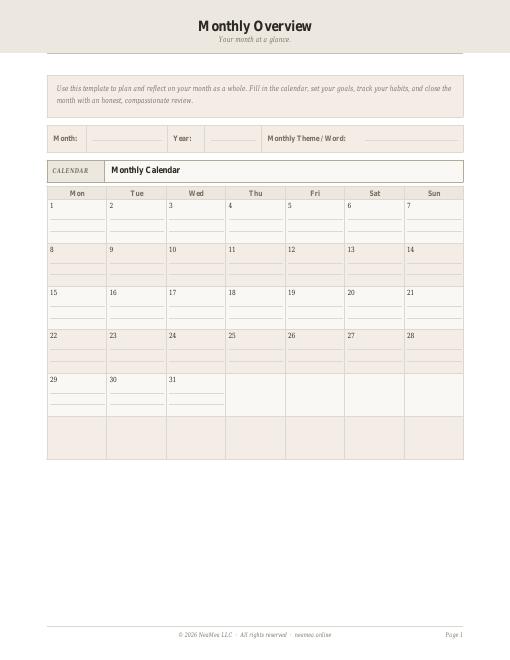
Monthly Overview Template
One page for the month. A calm view of the shape ahead.
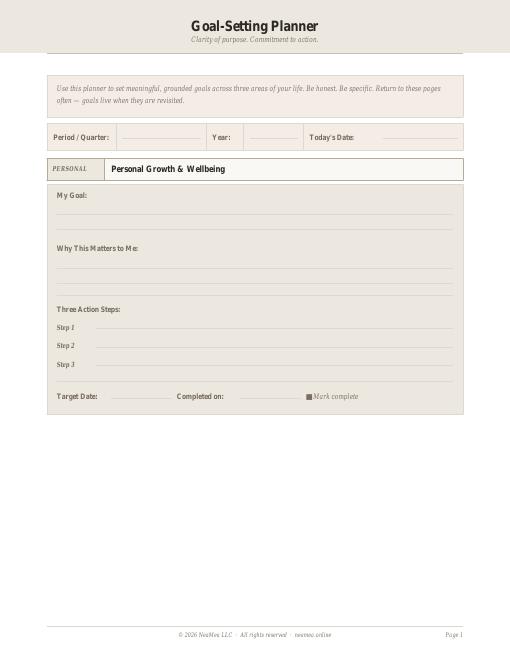
Goal Setting Planner
A quiet frame for what matters — intentions written down without pressure.
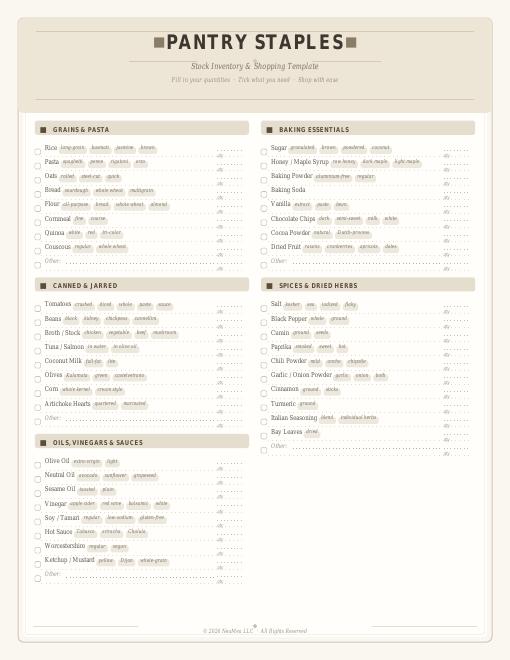
Pantry Staples 2026
A quiet baseline for the shelves — what to keep on hand without overthinking it.
Please note. This guide is general education about household organization. It is not financial, tax, or legal advice, and it does not take your personal circumstances into account.
© 2026 NEAMEA LLC. All rights reserved. Free NeaMea templates are for personal household use; please do not resell or redistribute them.