Write down what comes in — all of it
List every source of money the household receives in a normal month: salaries, freelance work, benefits, child support, rental income, regular transfers. Use the amount that actually lands in the account, not the amount before deductions.
If income varies, write the lowest normal month rather than the average. A plan built on your quietest month never needs an emergency version.
Name the fixed costs before anything else
Rent or mortgage, utilities, insurance, phone and internet, transport, childcare, loan payments, subscriptions. These are the costs that arrive whether or not you think about them.
Add them up once. That number — income minus fixed costs — is the real starting point for every other decision in the month.
Put bills on one page with their dates
Most late fees are not affordability problems; they are calendar problems. One page listing each bill, its amount, and the day it is due removes a surprising amount of low-level stress.
Group bills by the week they fall in. If one week is heavy, ask two providers to move their due date — most will, and it costs nothing.
Decide what is left, then give it a job
After fixed costs and bills, whatever remains covers groceries, everyday living, savings, and the occasional unexpected thing. Splitting it into those four is enough structure.
Detailed categories are optional. A household that knows its safe-to-spend number for the week is already doing the part that matters.
Hold one short money conversation a month
Twenty minutes, same time each month, no laptops open beyond one page. Read what happened, notice what surprised you, decide one small thing for next month.
Shared money works better when the conversation is boring and regular. Long, rare conversations tend to arrive with tension already attached.
Keep the paperwork near the numbers
Insurance policies, loan agreements, and account details belong somewhere you can reach during that monthly check. Hunting for a policy number is what turns twenty minutes into an evening.
Money and paperwork are one system. Organizing them separately is why either one drifts.
Educational only
This guide describes general household organization. It is not financial, tax, or legal advice, and it does not account for your personal circumstances.
Common questions
- How do I start organizing household finances?
- Write down all household income, list every fixed cost, put bills on one page with their due dates, and see what is left. Then review it once a month for about twenty minutes.
- How often should household finances be reviewed?
- Once a month is enough for most households. A short, regular review works better than long, occasional sessions, and it catches changes such as a rising subscription early.
- Do I need budgeting software to organize household finances?
- No. A single page or spreadsheet works. Software helps when several accounts, bills, and goals need to stay in view at once, or when two people share the same picture.
Continue with
More resources for this
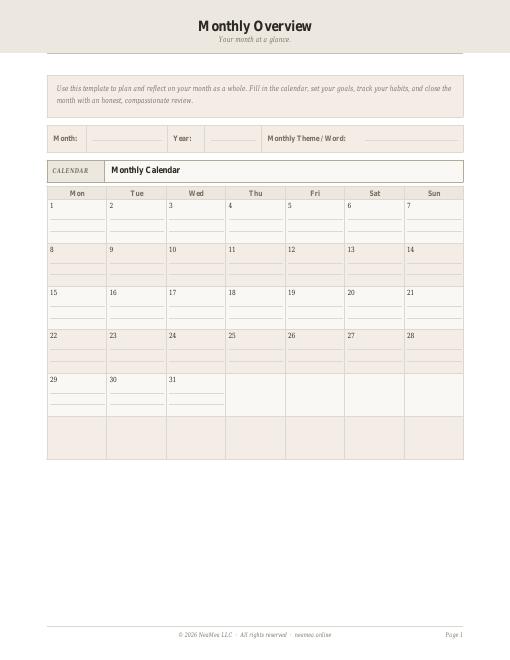
Monthly Overview Template
One page for the month. A calm view of the shape ahead.
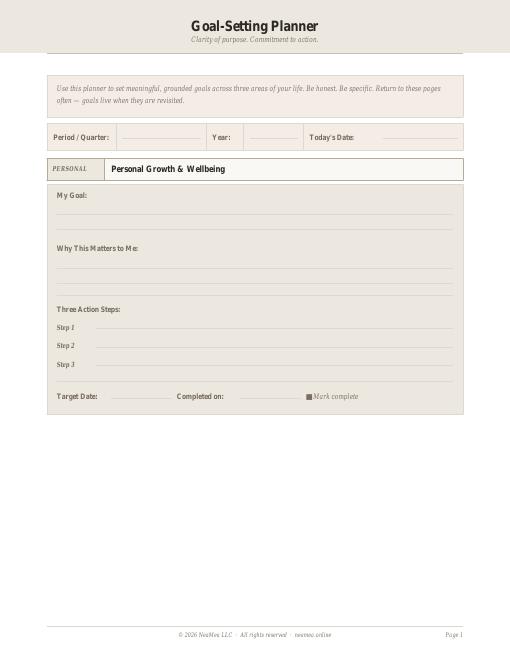
Goal Setting Planner
A quiet frame for what matters — intentions written down without pressure.
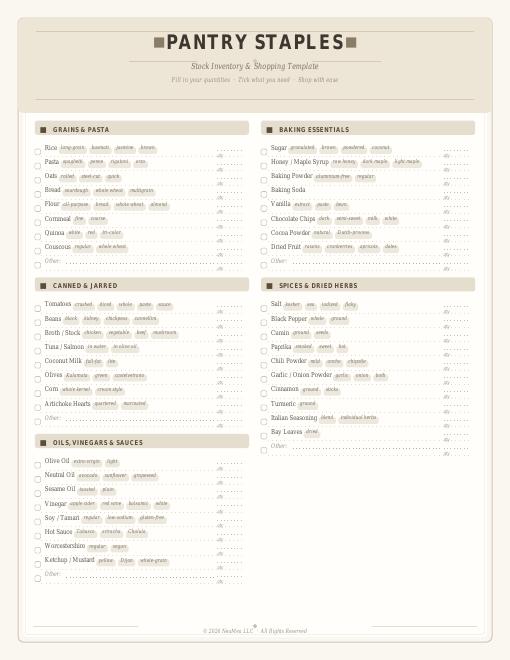
Pantry Staples 2026
A quiet baseline for the shelves — what to keep on hand without overthinking it.
Please note. This guide is general education about household organization. It is not financial, tax, or legal advice, and it does not take your personal circumstances into account.
© 2026 NEAMEA LLC. All rights reserved. Free NeaMea templates are for personal household use; please do not resell or redistribute them.