Plan five weekdays, five columns — leave the weekend open
Draw a small grid: Monday to Friday down the side, and five columns across the top — Breakfast, Lunch, Dinner, School, Work. That is the whole plan. The weekend stays blank on purpose, for leftovers, for going out, for whatever the day asks.
Five weekdays × five slots is twenty-five decisions. Made once on Sunday, they replace roughly a hundred small choices scattered through the week.
Breakfast: one shape per weekday, on repeat
Assign one repeatable breakfast to each weekday: oats on Monday, eggs on Tuesday, yogurt bowl on Wednesday, toast on Thursday, smoothie on Friday. Rotate every few weeks if it starts to feel stale.
Breakfast is not where creativity should live. A predictable morning is what makes the rest of the day less loud.
Lunch: build it from last night's dinner
Cook dinner with lunch in mind. An extra portion of pasta, grain bowl, or sheet-pan chicken becomes tomorrow's midday meal with almost no extra work.
This single habit removes the daily lunch decision and quietly cuts the grocery bill.
School: a shortlist of three or four shapes
For the school column, pick three or four lunches that actually get eaten — a sandwich, a wrap, a pasta salad, a bento with fruit and crackers. Rotate them across the week.
Add a small note for each child's preferences or allergies next to the column. It looks minor and prevents most of the packed-lunch problems.
Work: split by the shape of the day
Adult work lunches vary more by day than by taste. Keep three shapes: a desk lunch (a bowl or leftover that reheats well), a meeting-day lunch (something eaten cold at a desk between calls), and a work-from-home lunch (a fifteen-minute cook).
Match the shape to the calendar the night before, not the morning of.
Dinner: rotate five gentle categories
Anchor each dinner with a category: pasta, sheet-pan, soup, grain bowl, breakfast-for-dinner. Categories survive tired evenings. Specific recipes rarely do.
Rotate the categories every four weeks and swap only one or two recipes at a time. Constant novelty is what makes cooking feel like a chore.
Write the grocery list from the plan, not the fridge
Open the plan first, list the four or five ingredients each slot needs, and only then walk to the fridge to cross off what is already there. Checking the fridge first is a common way to end up with three bunches of parsley.
One real grocery run per week, with a five-minute midweek top-up for milk and produce if needed. Daily shopping is where budgets quietly slip.
Share the load, don't shoulder it
Inside the NeaMea Life Balance app, the Shared Responsibility board lets a household decide out loud who cooks, who packs lunches, and who does the shopping each week. Meal planning stops being one person's silent job the moment the plan sits somewhere everyone can see.
What to do next
Sketch this week's five columns on paper tonight. Not recipes — just the shapes. Then print the free Weekly Meal Plan Chart from Resources and fill it in with the household.
Keep the list somewhere everyone can see it
A printable grocery list on the fridge cuts more forgotten items than any app. Everyone in the house can add to it as things run out.
More resources for this
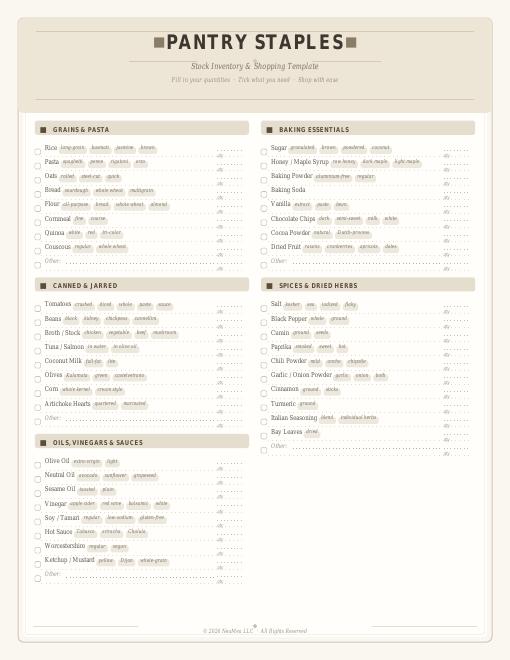
Pantry Staples 2026
A quiet baseline for the shelves — what to keep on hand without overthinking it.
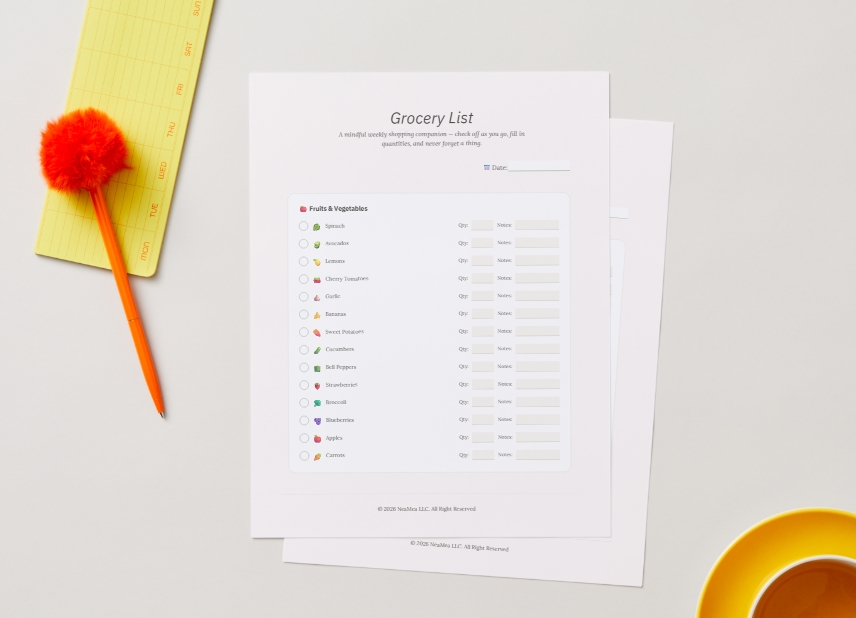
NeaMea Printable Grocery List
A mindful weekly shopping companion — check off as you go, jot quantities, never forget a thing.
A family food chart for calmer weeks
One page on the fridge, categories not recipes — no more nightly negotiations.
© 2026 NEAMEA LLC. All rights reserved. Free NeaMea templates are for personal household use; please do not resell or redistribute them.