Five columns, five weekdays
Draw the chart with Monday to Friday down the side and five columns across: Breakfast, Lunch, Dinner, School, Work. One page, twenty-five cells, one shared reference for the household.
The chart is not a schedule. It is a shape. Anyone in the house can read it in five seconds and know roughly what the day looks like.
Write categories, not recipes
Fill each cell with a category: oats, eggs, sandwich, pasta, soup, sheet-pan. Not carbonara, not tortilla soup. Categories survive a light grocery week; specific recipes rarely do.
Categories also make it easy for someone else to cook. 'Sheet-pan Wednesday' can be chicken and vegetables one week, sausage and potatoes the next, with no rewrite.
The School column: three or four rotating shapes
Kids eat what they recognize. Keep the school column to three or four shapes that actually come home empty — a sandwich, a wrap, a pasta salad, a bento with fruit and crackers.
Add a narrow note next to each name for allergies and strong preferences. It looks small, and it prevents the two most common weekday problems: packing something a child will not eat, and forgetting an allergy on a tired morning.
The Work column: match the shape to the day
Adult lunches vary more by the calendar than by taste. Mark each work cell with one of three shapes: desk (a bowl or leftover that reheats well), meetings (something cold that can be eaten between calls), and work-from-home (a fifteen-minute cook).
Sync it with the household calendar on Sunday, not on Monday morning.
One wildcard cell per row
Leave one cell blank on each row on purpose — leftovers, cereal, takeout, whatever the day asks for. Five wildcards across the week is enough breathing room for the plan to survive real life.
The chart is a scaffold, not a cage. The wildcards are where the flexibility lives.
Put it where meals actually happen
On the fridge, not in a drawer, and not in a shared document nobody opens. Physical, visible, close to the food, close to the person who cooks.
Redraw the chart every month, not every week
Weekly rewrites turn the chart into another chore. A monthly redraw feels more like a small household ritual — same five columns, a few gentle tweaks, and back to normal.
Split cooking, packing, and shopping out loud
The chart is only half the work. The Shared Responsibility board inside the NeaMea Life Balance app is where a household decides who cooks each dinner, who packs school lunches, and who does the weekly grocery run. When the split is visible, the resentment tends to fade.
What to do next
Print the free Weekly Meal Plan Chart from Resources, sketch this month's categories on it tonight, and stick it to the fridge before Monday. The first week will feel oddly quiet at mealtimes, and that is the whole idea.
Pair the chart with a running grocery list
The chart tells you what you are eating. A printable grocery list next to it tells you what to buy. Together they cover almost every kitchen decision.
More resources for this
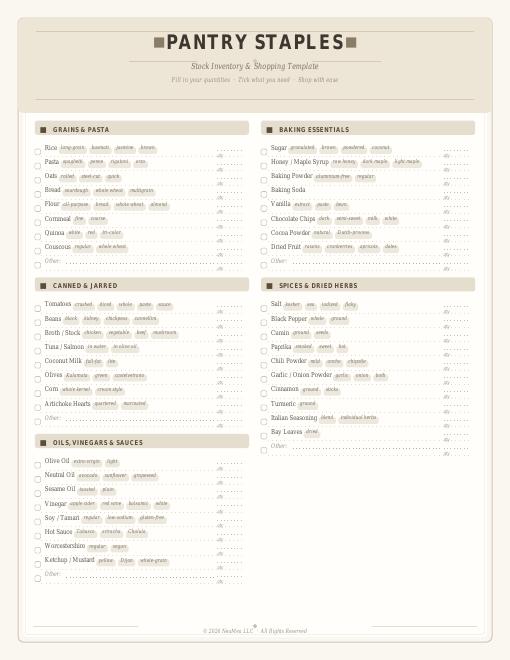
Pantry Staples 2026
A quiet baseline for the shelves — what to keep on hand without overthinking it.
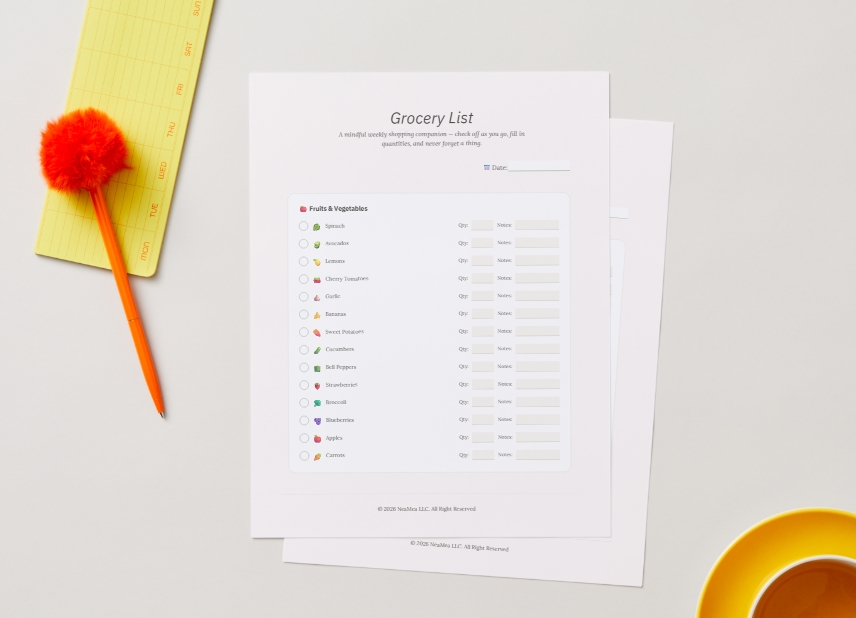
NeaMea Printable Grocery List
A mindful weekly shopping companion — check off as you go, jot quantities, never forget a thing.
A simple weekly meal plan you can stick to
Five categories, one shop, two nights off. Boring on purpose, calmer by design.
© 2026 NEAMEA LLC. All rights reserved. Free NeaMea templates are for personal household use; please do not resell or redistribute them.