What to write for every trip
Date, starting point, destination, business purpose, odometer start and end, and total miles. That's the whole record. The purpose line matters most — "client visit, Smith Bakery" is clear a year later; "meeting" is not.
Log it before you turn the engine off
The best moment to log a trip is when you park. Keep the printed log in the glovebox with a pen clipped to it. Thirty seconds now saves an afternoon of reconstructing calendars later.
Commuting is usually not business mileage
In many places, driving from home to your regular workplace counts as personal commuting. Trips from your workplace to clients, suppliers, the bank, or a second job site usually count as business. Note the rule that applies to you once, at the top of your log.
Total it monthly, not yearly
At month-end, add the miles column and write the total at the bottom of the page. Twelve monthly totals make the yearly figure a two-minute job.
What to do next
Download the free NeaMea Mileage Tracker, print a month's worth of pages, and put them in the car today. Pair it with the Business Expense Tracker for fuel, parking, and tolls.
Educational, not tax advice
This guide describes common organizational practice. It is not tax, financial, or legal advice, and NeaMea is not an accountant or CPA. Deduction rules and rates vary by country and year — confirm with a qualified professional.
Common questions
- Do I need a mileage log if I use an app?
- Apps work well if they record purpose and odometer readings. A paper log is a reliable backup and needs no battery or signal.
- How long should I keep mileage records?
- Common practice is to keep them with your tax records for several years. Confirm the exact period with your accountant or local tax authority.
- Can I estimate miles at the end of the year?
- Estimates are usually much weaker than a log kept at the time of the trip. Logging as you go is the safer habit.
More resources for this
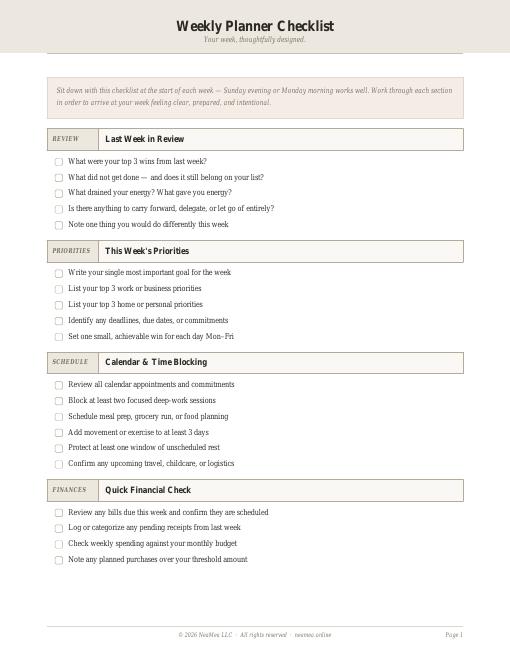
Weekly Planner Checklist
A weekly rhythm of intentions, priorities, and small reviews.
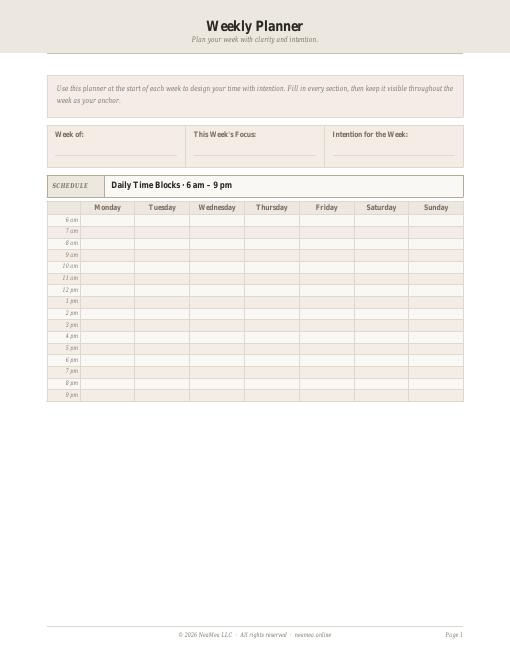
Weekly Planner Template
A printable weekly page you can fill in by hand.
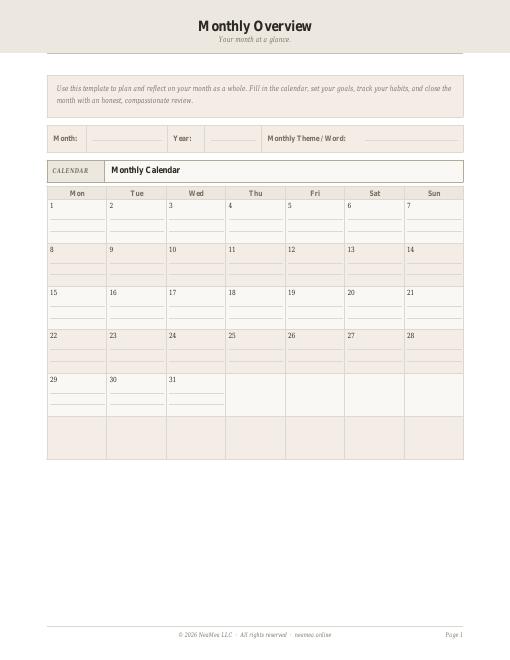
Monthly Overview Template
One page for the month. A calm view of the shape ahead.
Please note. This guide is general education for small-business owners. It is not tax, financial, accounting, or legal advice, and NeaMea is not a CPA or law firm. For decisions about taxes, structure, pricing, or compliance, consult a qualified professional who knows your situation.
© 2026 NEAMEA LLC. All rights reserved. Free NeaMea templates are for personal household use; please do not resell or redistribute them.