Minutes 0–10: record
Log the month's income and expenses from your bank and card statements. Match payments to invoices so you know what's still owed.
If you kept the weekly expense habit, this step is mostly checking rather than catching up.
Minutes 10–20: reconcile
Compare your records to the actual account balances. They should match. When they don't, the difference is almost always a missed subscription, a duplicate, or a cash expense that never got logged.
This is also the moment to move your tax set-aside into its separate account — before it can be spent.
Minutes 20–30: review
Write five lines: revenue, expenses, profit, tax set aside, and anything still unpaid. Then one sentence: what changed this month?
That single page, repeated twelve times, is a financial story of your year — and exactly what tax season, a loan officer, or your own curiosity will ask for.
What to do next
Download the free Monthly Bookkeeping Checklist and the Monthly Financial Review sheet, and put a recurring 30-minute appointment on the last Friday of each month.
Educational, not financial advice
This routine is general organizational practice. It doesn't replace an accountant, and it isn't tax advice — for what to categorize, deduct, or file, consult a qualified professional.
More resources for this
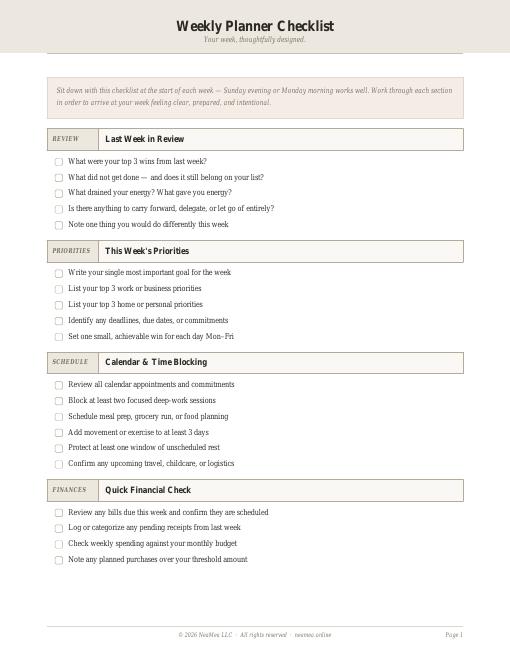
Weekly Planner Checklist
A weekly rhythm of intentions, priorities, and small reviews.
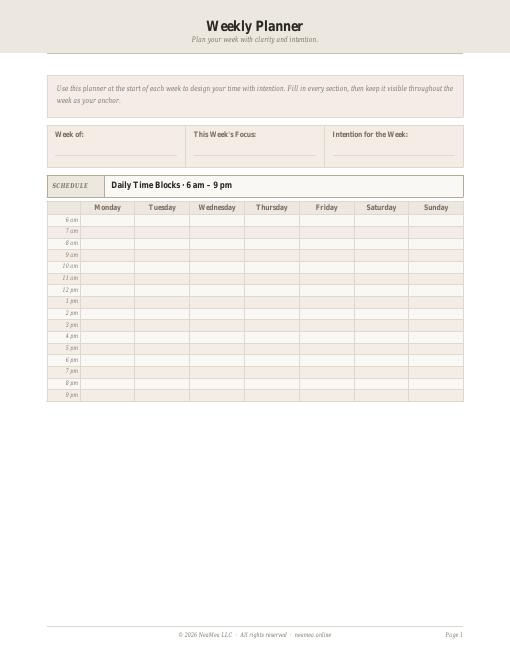
Weekly Planner Template
A printable weekly page you can fill in by hand.
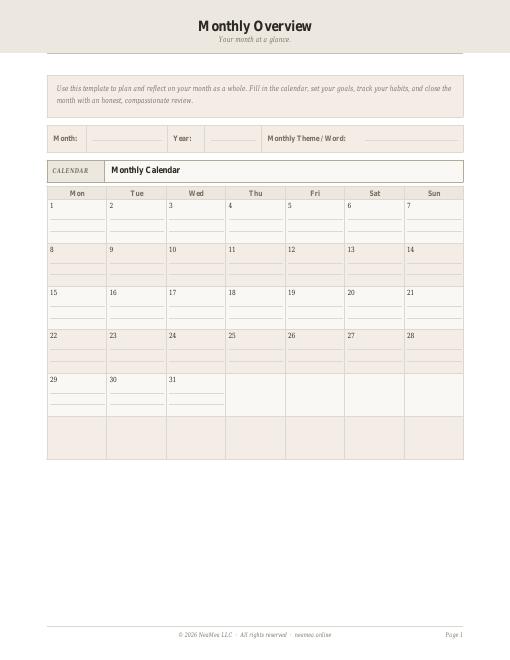
Monthly Overview Template
One page for the month. A calm view of the shape ahead.
Please note. This guide is general education for small-business owners. It is not tax, financial, accounting, or legal advice, and NeaMea is not a CPA or law firm. For decisions about taxes, structure, pricing, or compliance, consult a qualified professional who knows your situation.
© 2026 NEAMEA LLC. All rights reserved. Free NeaMea templates are for personal household use; please do not resell or redistribute them.